
How to Choose the Right Erbium Glass Laser?
1. What Is an Erbium Glass Laser?
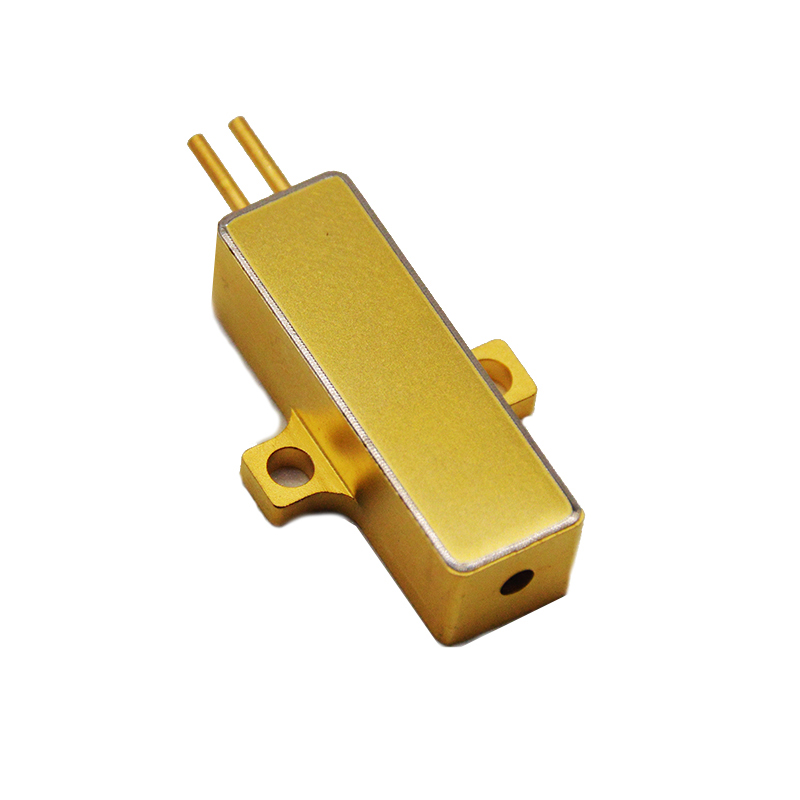
An erbium glass laser is a solid-state laser that uses erbium-doped glass as its gain medium. It is typically pumped by a semiconductor laser diode, which provides the energy required to excite erbium ions and generate laser emission.
Many erbium glass lasers operate in the 1.5 μm wavelength region, with commonly used wavelengths including 1535 nm, 1540 nm, and 1545 nm. Among these, 1535 nm is widely used in laser rangefinding and eye-safe laser applications.
These lasers are valued for their compact design, pulsed output capability, and suitability for integration into optical systems. Typical applications include laser rangefinders, LiDAR systems, optoelectronic detection, and remote sensing.
2. Key Parameters to Consider When Selecting an Erbium Glass Laser
Different applications require different laser characteristics. Choosing the right erbium glass laser involves more than simply comparing output power or wavelength. Several technical parameters should be evaluated together.
1. Output Wavelength
Wavelength is one of the first specifications to consider when selecting an erbium glass laser.
Many erbium glass lasers operate around 1535 nm within the 1.5 μm wavelength band. The selected wavelength affects atmospheric transmission, detector response, and the optical design of the overall system.
For example, 1535 nm lasers are commonly used in eye-safe laser rangefinding systems. It is important to ensure that the laser wavelength is compatible with the receiver detector, optical filters, and other optical components.
2. Pulse Energy
For pulsed erbium glass lasers, pulse energy is one of the most important performance parameters.
It represents the energy delivered in a single laser pulse and is typically measured in microjoules (μJ) or millijoules (mJ).
Higher pulse energy can provide a stronger detection signal under otherwise identical conditions. However, higher energy is not always better. The required pulse energy depends on target distance, target reflectivity, receiver optics, detector sensitivity, and applicable laser safety limits.
Therefore, pulse energy should be selected according to the actual ranging distance and detection requirements.
3. Pulse Width
Pulse width refers to the duration of an individual laser pulse and is usually measured in nanoseconds (ns).For example, 5 ns, 10 ns, and 20 ns are possible pulse-width specifications for pulsed lasers.Pulse width affects peak power, the timing resolution of a ranging system, and signal processing requirements.
For the same pulse energy, a shorter pulse generally produces higher peak power. This makes pulse width particularly important in applications requiring fast response and high peak power.
4. Repetition Rate
Repetition rate indicates how many laser pulses are emitted per second. It is generally measured in hertz (Hz).
For example:
1 Hz: One pulse per second.
10 Hz: Ten pulses per second.
100 Hz: One hundred pulses per second.
A higher repetition rate allows more measurements within a given period, which can improve the data update rate of a laser ranging system.
However, increasing the repetition rate also requires consideration of thermal management, pump power, and average output power.
5. Beam Quality and Divergence
Beam quality and divergence affect how laser energy is distributed as the beam travels through space.
A smaller divergence angle generally helps maintain a smaller beam spot over longer distances, which can be beneficial for long-range target detection.
However, actual ranging performance also depends on the transmitting optics, beam shaping, target characteristics, and receiver system.
For long-range laser ranging and LiDAR applications, beam divergence, spot distribution, and output stability should all be considered.
6. Operating Temperature and Stability
Erbium glass lasers typically operate together with driver circuits, pump sources, and optical components. Environmental conditions can therefore influence their performance.
Temperature variations may affect output wavelength, pulse energy, and operating stability.
For outdoor equipment, UAV systems, or other demanding environments, it is important to evaluate the operating temperature range, pulse energy stability, long-term reliability, and vibration resistance.
3. Choosing an Erbium Glass Laser for Different Applications
Different applications place different demands on laser performance.
Laser Rangefinding:Pulse energy, pulse width, repetition rate
LiDAR:SystemsRepetition rate, beam divergence, output stability
UAV Laser Ranging:Size, weight, power consumption, environmental adaptability
Portable Rangefinders:Module dimensions, driving method, power consumption
Optoelectronic Detection:Wavelength compatibility, pulse stability, synchronization
For example, an erbium glass laser used in a UAV ranging system must meet the required measurement distance while keeping size, weight, and power consumption as low as possible.
In fixed laser ranging equipment, greater emphasis may be placed on pulse energy, repetition rate, and long-term operating stability.
The best approach is to evaluate the laser as part of the complete optical system rather than comparing individual specifications in isolation.
4. Other Factors to Consider Before Purchasing
In addition to the main optical parameters, several practical factors should be checked before selecting an erbium glass laser.
Driving Method: Check the required driver circuit, trigger signals, operating voltage, and current specifications.
Package Design: Select a package size and optical output configuration that fit the available installation space.
Thermal Management: Understand the heat dissipation requirements to prevent excessive temperature from affecting laser performance.
Service Life: Evaluate the reliability and lifetime specifications of the pump diode, laser glass, and associated components.
Customization Options: If standard products do not meet system requirements, ask the supplier about customized wavelengths, pulse energy, repetition rates, and package dimensions.
Selecting the right erbium glass laser requires a comprehensive evaluation of output wavelength, pulse energy, pulse width, repetition rate, beam divergence, operating temperature, and package dimensions.
For applications such as laser rangefinding, LiDAR, and UAV systems, the laser must also be matched to the target distance, detector performance, optical design, and overall system power consumption.
The best erbium glass laser is not necessarily the one with the highest specifications. It is the one that meets the system's performance requirements while balancing size, power consumption, stability, and cost.
English
Name*
phone number/ Whatsapp / Wechat*
Email
message*