
How to Select a 1535nm Erbium Glass Laser for Your Laser Rangefinder Project
Selection Guide for erbium glass laser rangefinder
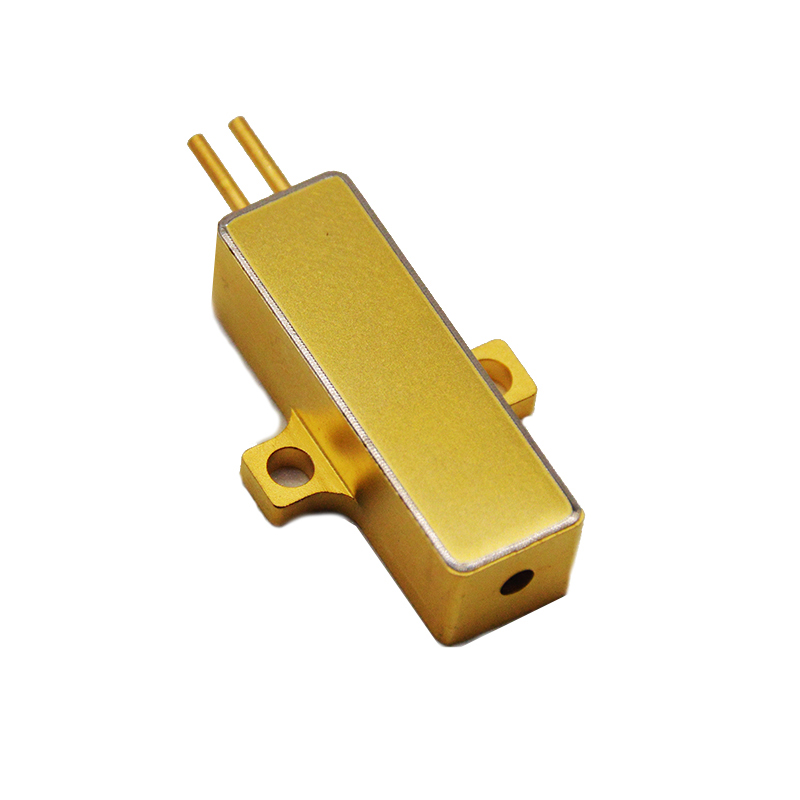
When developing a laser rangefinder, choosing the right laser source is one of the most critical design decisions. Among multiple infrared laser options, the 1535nm erbium glass laser stands out due to its inherent eye-safe property and excellent atmospheric transmission characteristics. Many optical engineers prefer this gain medium over other pulsed lasers for outdoor ranging devices, but selecting a suitable module requires more than just checking the central wavelength. You need to evaluate pulse characteristics, stability, operating temperature range and mechanical integration requirements together, as these parameters will directly affect the final ranging performance and product reliability.
The 1535nm wavelength falls into the eye-safe infrared band. Water molecules in the human eye absorb light at this wavelength before it reaches the retina, which greatly reduces the risk of permanent eye injury even in accidental exposure. This feature makes erbium glass laser the mainstream choice for portable rangefinders used in field environments. Unlike 1064nm lasers, which can cause severe retinal damage, 1535nm Er:glass lasers meet stricter safety standards for outdoor measurement equipment. Even so, system designers still need to follow laser safety protocols during product assembly and testing.
When comparing different erbium glass laser suppliers, you will find that modules with the same nominal wavelength may perform very differently in real working conditions. Pulse energy and pulse width work together to decide the maximum detection distance and measurement precision. Higher pulse energy helps obtain stronger echo signals for long-distance targets, while a narrower pulse width reduces timing error and improves ranging accuracy. Energy stability is another easy-to-overlook indicator. If pulse energy fluctuates heavily, your rangefinder will produce inconsistent readings under the same test condition.
Key factors you need to evaluate before purchase
Pulse energy and pulse width matching your target ranging distance
Energy stability under continuous repeated triggering
Operating temperature range for your application environment
Beam quality and beam divergence to match your transmit optical lens
Mechanical size, mounting interface and electrical driving requirement
Available customization support and sample lead time
Module packaging also plays an important role in long-term reliability. Hermetic packaging can prevent moisture and dust from entering the internal optical components, which is necessary for equipment working in humid or coastal outdoor environments. Non-hermetic packages are usually cheaper and fit for indoor laboratory use only. You should clarify your application scenario with the supplier early to avoid selecting a package type that cannot survive the actual working environment.
Typical technical specifications of Leirte 1535nm Erbium Glass Laser Module
| Parameter | Specification |
|---|---|
| Central Wavelength | 1535nm ±5nm |
| Pulse Width (FWHM) | 3 ~ 6 ns |
| Pulse Energy | 50μJ ~ 1000μJ |
| Repetition Rate | 1 ~ 10Hz |
| Beam Quality M² | ≤1.5 |
| Energy Stability (RMS) | ≤3% |
| Operating Temperature | -40℃ ~ +65℃ |
System integration is another part of the selection process. The laser module cannot work alone; it needs matched drive circuit and optical transmitting assembly. Some buyers only focus on laser parameters and ignore the matching circuit design. This mistake often leads to poor pulse consistency or even damage to the laser chip. Reliable suppliers can provide reference drive solutions together with laser modules, which can shorten your product development cycle significantly.
After narrowing down candidate models, sample testing is strongly recommended. Lab static testing can verify wavelength and pulse performance, while field testing simulates real atmospheric conditions such as fog and high temperature. Field test data will help you confirm whether the laser can maintain stable ranging signals in complex weather.
FAQ
Q1: What is the main advantage of 1535nm erbium glass laser compared with 1064nm laser for rangefinder?
A1: The biggest advantage is eye safety. 1535nm infrared light is absorbed by water in the eye before hitting the retina. In addition, 1535nm shows better transmission under haze and fog conditions, which improves the effective ranging distance in outdoor scenarios. 1064nm laser has lower cost but carries high eye damage risk, limiting its usage for portable field rangefinders.
Q2: Can the 1535nm erbium glass laser module be customized?
A2: Yes. We can adjust pulse energy, repetition rate and mechanical package according to your system requirements. Custom optical interfaces are also available. You can send your full technical specification sheet to get a tailored solution and quotation.
Q3: What is the impact of beam divergence on laser ranging performance?
A3: Large beam divergence makes laser spot expand rapidly over distance, dispersing energy and weakening the reflected signal. Small divergence keeps energy concentrated, supporting longer detection range. But the divergence must match your optical lens design, too small divergence may bring extra difficulty for optical alignment.
Q4: How long does it take to get samples of erbium glass laser?
A4: Standard modules can be shipped within 1 to 2 weeks. Customized versions require 3 to 4 weeks, depending on the complexity of parameter and packaging modification.
Q5: Does operating temperature affect the pulse performance of erbium glass laser?
A5: Yes. Extreme high or low temperature will change the gain medium property and alter pulse energy. Our standard module supports -40℃ to +65℃ wide temperature range, suitable for most outdoor industrial ranging equipment. If you need wider temperature tolerance, customized thermal structure is available.
English
Name*
phone number/ Whatsapp / Wechat*
Email
message*