
What Is a Laser Diode? Principle, Device Structures, Parameters & Complete Selection Guide
Basic introduction of laser diode
A laser diode, also known as semiconductor laser diode, is a coherent light source based on semiconductor optoelectronics. It converts electrical energy into stimulated radiation laser output. Unlike solid-state lasers or gas lasers, the gain medium of a laser diode is a thin semiconductor epitaxial layer grown on a substrate wafer. The advantages of laser diodes include compact footprint, high electro-optic conversion efficiency, low power consumption and easy integration into optoelectronic systems, which makes them the most widely used laser source across consumer, industrial, aerospace and optical communication fields.
The working mechanism originates from stimulated emission and population inversion. Inside the chip, the epitaxial stack consists of n-type cladding layer, active gain region and p-type cladding layer. When forward bias voltage is applied, carriers including electrons and holes are injected into the active region. Electrons and holes recombine and release photons. Under low injection current, only spontaneous emission occurs, which is the same light generation mechanism as ordinary LEDs. When the injected carrier density exceeds the population inversion threshold, optical gain surpasses optical loss within the resonant cavity. Photons oscillate back and forth between the two reflective facets of the cavity, continuously amplifying light via stimulated emission. When the round-trip gain equals round-trip loss, stable laser oscillation is established, and directional coherent laser beam is emitted from the output facet.
The bandgap of the semiconductor active material determines the central emission wavelength. Common material systems cover multiple bands. GaAs-based epitaxy produces near-infrared bands around 808 nm, 905 nm and 980 nm, widely used for laser pumping and pulsed LiDAR. InGaAsP material is used for 1310 nm and 1550 nm telecom bands. GaN-based materials realize blue and ultraviolet laser emission. Wavelength is not a fixed constant; laser diode wavelength drifts with junction temperature. The typical wavelength temperature coefficient is approximately 0.2~0.3 nm/°C for near-infrared edge-emitting laser diodes. This thermal wavelength shift is a critical factor that optical engineers must consider for wavelength-sensitive systems such as spectroscopy and wavelength-locked pumping.
Optical cavity structure defines the classification and core performance of laser diodes. Different cavity designs lead to huge differences in spectral linewidth, beam quality, modulation bandwidth and application boundaries.
Main Types of Semiconductor Laser Diodes
FP Fabry-Perot Laser Diode: The simplest edge-emitting laser diode. The two cleaved crystal facets naturally serve as reflection mirrors forming the resonant cavity. FP laser diodes have wide spectral envelope with multiple longitudinal modes. They are low-cost and widely adopted for laser pumping, industrial illumination, low-precision optical sensing. They are not suitable for applications requiring single wavelength and narrow linewidth.
DFB Distributed Feedback Laser Diode: A periodic grating is fabricated directly inside the active waveguide. The grating provides distributed optical feedback instead of facet reflection. DFB laser diodes operate in stable single longitudinal mode, narrow spectral linewidth and low wavelength drift under current modulation. The mainstream application is long-distance fiber optical communication, high-precision gas spectroscopy and coherent ranging.
DBR Distributed Bragg Reflector Laser Diode: The gain section and Bragg grating reflector are separated on the chip. Independent tuning of gain current and grating current can achieve wide wavelength tuning. DBR laser diodes are commonly used in tunable laser systems and optical test instruments.
VCSEL Vertical-Cavity Surface-Emitting Laser: Laser beam emits vertically perpendicular to the wafer surface, instead of emitting from the edge of the chip. The resonant cavity is very short, so the device works in single longitudinal mode. VCSEL features low threshold current, circular symmetric beam profile, easy array packaging and on-wafer testing capability. Major use cases include 3D sensing, facial recognition, short-range LiDAR and optical interconnection.
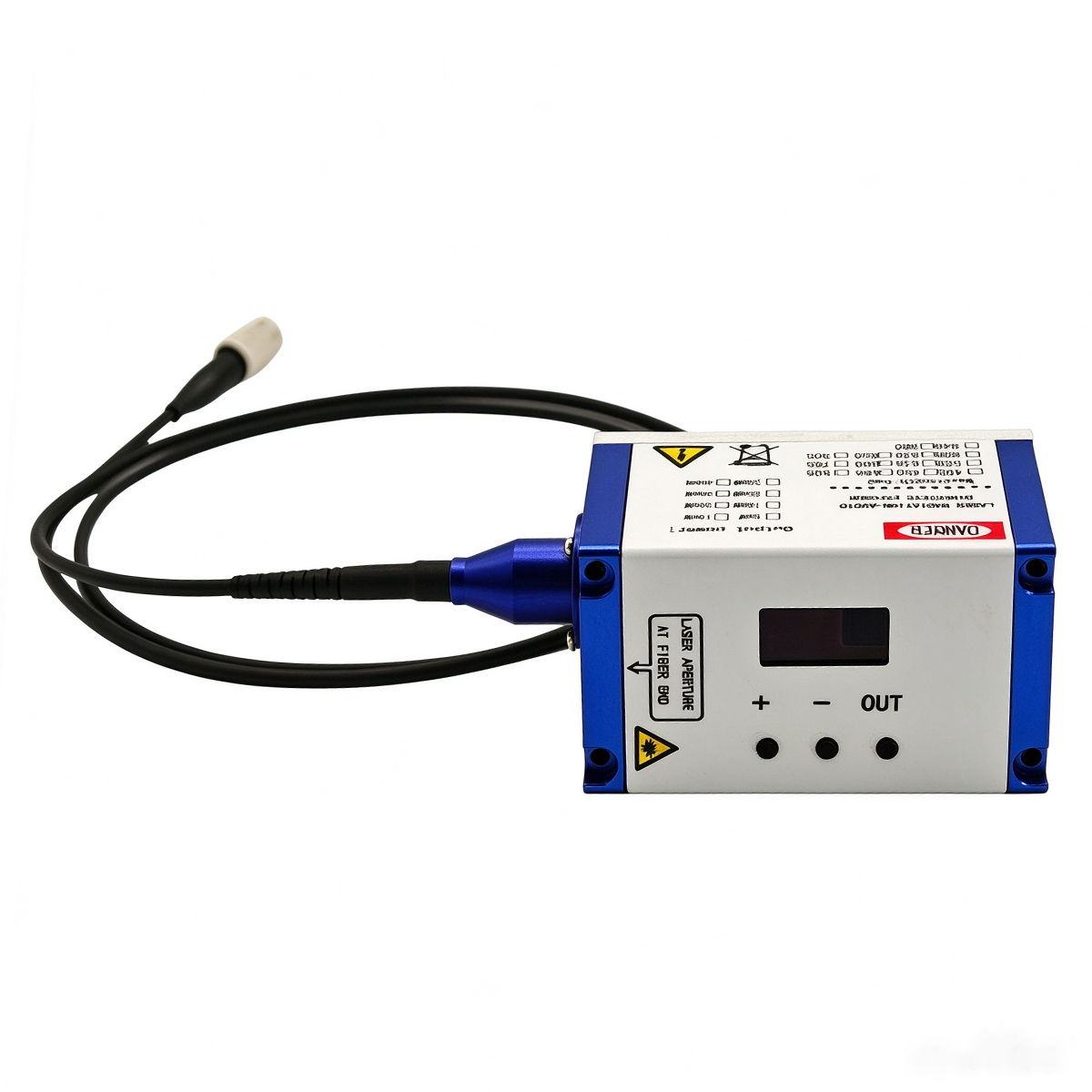
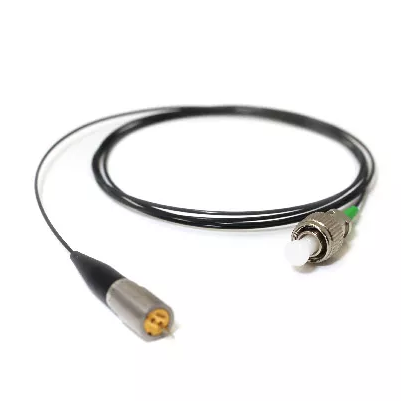
Fiber-Coupled Laser Diode: An edge-emitting laser diode chip is optically coupled into single-mode or multi-mode optical fiber. The free-space elliptical beam is converted into guided fiber output, simplifying optical alignment in system integration. Fiber-coupled laser diodes are common in laser pumping, medical laser systems and distributed optical sensing.
Pulsed Laser Diode: Optimized for high peak power short pulse operation. Specially designed epitaxy and electrode structure can withstand large transient current pulses. 905 nm pulsed laser diodes are the mainstream light source for automotive and industrial LiDAR.
Laser diode performance evaluation cannot rely only on wavelength and output power. A full set of optical, electrical and thermal parameters must be assessed during component selection. The following table lists critical parameters, physical definitions and engineering considerations.
| Parameter | Definition | Engineering Notes |
|---|---|---|
| Central Wavelength | Peak emission wavelength at rated operating condition | Determined by semiconductor bandgap; shifts with junction temperature |
| Optical Output Power | CW continuous power or peak pulsed optical power | CW power is average output; pulsed power refers to peak power under specified pulse width and duty cycle |
| Threshold Current | Minimum injection current to achieve laser oscillation | Lower threshold current means higher electro-optic efficiency; rises as temperature increases |
| Slope Efficiency | Increase of optical output power per unit injection current above threshold | Key indicator of electro-optic conversion efficiency |
| Beam Divergence | Far-field divergence angle, fast axis and slow axis | Edge-emitting diodes have asymmetric elliptical beam; fast axis divergence much larger than slow axis |
| Spectral Linewidth | Spectral width of emitted laser | Single-mode DFB has narrow linewidth; FP laser exhibits multi-mode wide spectrum |
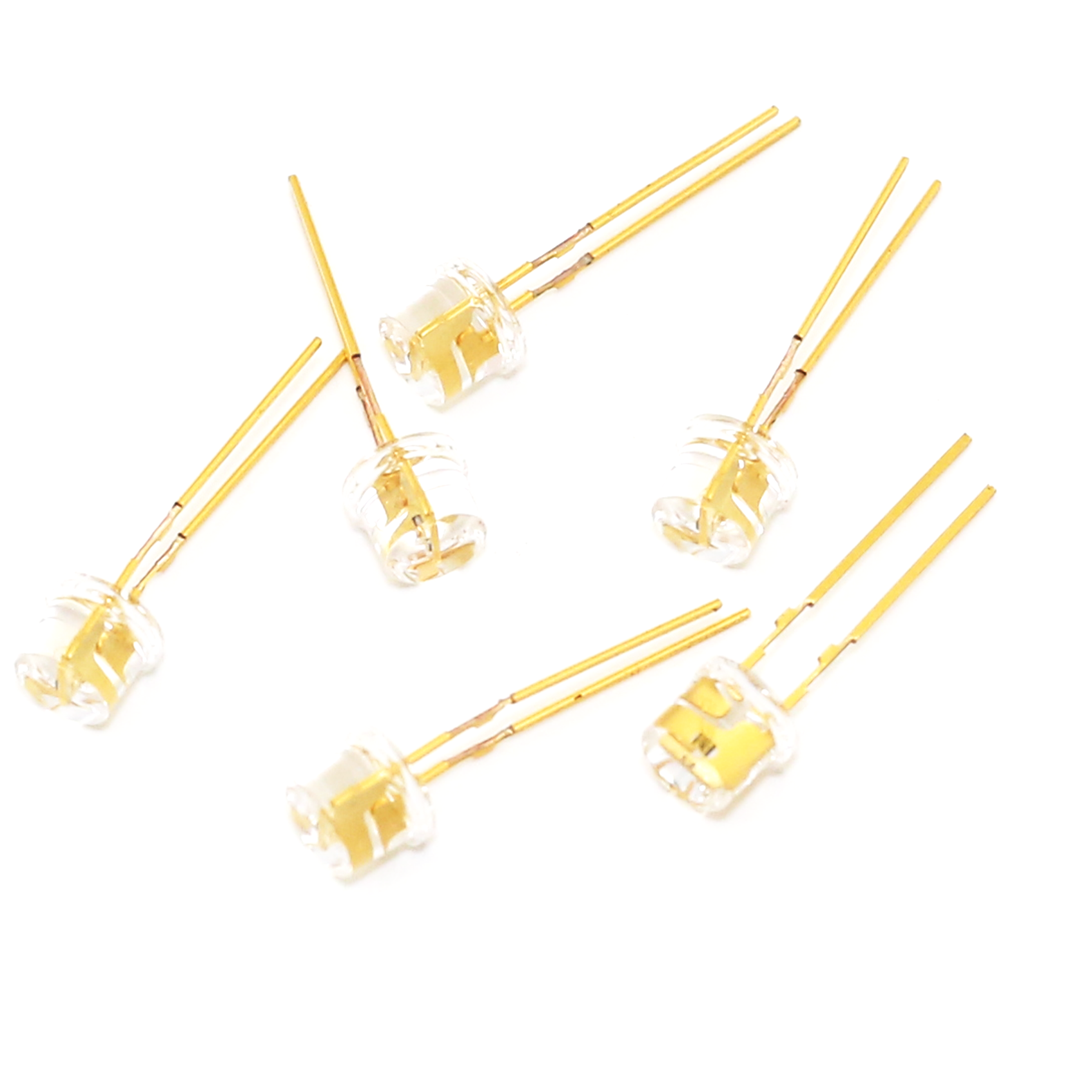
| Package Form | Mechanical housing for chip protection, heat dissipation and optical interface | TO56, TO9, TO3, C-Mount, Butterfly, fiber pigtail |
| Operating Temperature Range | Allowable junction temperature window | Exceeding temperature limit causes wavelength drift, power drop or permanent device damage |
| Rise / Fall Time | Optical response speed under current modulation | Determines maximum modulation frequency for high-speed sensing and communication |
Beam characteristics are often overlooked by junior system designers. Edge-emitting laser diodes produce an asymmetric elliptical beam. The fast axis is perpendicular to the epitaxial plane, with divergence angle typically 25°~40°, while the slow axis is parallel to the epitaxial plane with divergence around 8°~15°. If beam collimation design ignores this asymmetry, the final spot will be distorted after lens collimation. VCSEL generates near-circular beam, which greatly reduces optical lens design difficulty.
Thermal management is one of the most important reliability design points for laser diodes. More than 70% of the input electrical power is converted into heat instead of laser light. High junction temperature will raise threshold current, reduce output power, shift emission wavelength, accelerate epitaxy degradation and shorten service life. For high-power continuous-wave laser diodes, heat sink, thermistor and TEC thermoelectric cooler are often required to stabilize junction temperature. Even low-power TO packaged laser diodes need proper thermal contact between package base and system heat dissipation structure.
Laser diodes are sensitive to electrostatic discharge and current surge. ESD can create micro-defects inside the active region, causing gradual power degradation or sudden failure. A constant current driver circuit is mandatory instead of constant voltage power supply. Current spikes during power-on and power-off must be suppressed. Many device failures in customer projects are not caused by inherent chip quality, but by improper driving circuit and lack of ESD protection.
Different application scenarios impose completely different requirements on laser diode specifications. For LiDAR systems, pulsed laser diodes with high peak power, fast rise time and matched wavelength are selected; eye safety requirements must be evaluated simultaneously. For fiber laser pumping, high CW power 808 nm or 976 nm laser diodes are prioritized, with strict requirements on wavelength locking and thermal stability. For gas spectroscopic detection, DFB single-mode laser diodes with narrow linewidth are required. For short-range 3D sensing, VCSEL arrays are the preferred solution.
Leirte provides a full portfolio of laser diodes covering multiple wavelengths, power grades and packaging options. Our product lineup includes TO packaged edge-emitting laser diodes, pulsed laser diodes, fiber-coupled laser diodes and supporting optical components. We support custom epitaxy parameter matching, optical coupling and packaging modification according to your optical system design. Our engineering team can assist with parameter verification, compatibility assessment and reliability consultation for your sensing, pumping and measurement projects. Contact us to get technical datasheets and quotation.

FAQ
Q: What is the essential difference between laser diode and LED?A: LED only generates spontaneous emission without optical resonant cavity. Light output is incoherent, wide spectrum and large divergence. Laser diode achieves population inversion inside resonant cavity and produces stimulated emission output. Laser beam features coherence, narrow spectral width and high directionality. The electro-optic conversion efficiency of laser diode is also much higher.
Q: What is population inversion?A: Population inversion describes a non-equilibrium carrier state in semiconductor gain medium. Normally most electrons stay in low energy band. Under forward injection, enough electrons are pumped into high energy band. The quantity of high-energy electrons exceeds low-energy electrons. Under this condition, stimulated emission absorption exceeds light absorption, and optical gain is generated for laser oscillation.
Q: Why do laser diodes need constant current driver?A: The I-V curve of semiconductor laser diode has steep rising characteristic after turn-on voltage. Tiny voltage fluctuation will lead to huge current variation. Excess current will burn the active region instantly. Constant current driver stabilizes injection current and prevents current surge damage.
Q: What are common failure modes of laser diodes?A: Main failure modes include catastrophic optical damage (COD), gradual degradation of active region, ESD induced micro-defect, thermal burnout and facet contamination. COD usually occurs under excessive optical power density on the output facet.
Q: Can you customize laser diode packaging and fiber coupling?A: Yes. We can customize fiber type, coupling efficiency, pin assignment and package structure according to your system mechanical and optical requirements.
English
Name*
phone number/ Whatsapp / Wechat*
Email
message*