
How does a laser distance sensor work
Learn how laser distance sensor works, including ToF, phase-shift and laser triangulation principles
Introduction
A laser distance sensoris a non-contact optical measuring device widely adopted in industrial automation, robotics, logistics and smart manufacturing. Unlike contact displacement gauges or ultrasonic sensors, it uses a narrow, collimated laserbeam to detect the distance between the sensor and a target surface, delivering fast, stable and high-precision readings without touching the object.
Many buyers wonder: how does a laser distance sensor capture accurate distance data in milliseconds?Simply put, it emits laser light toward the target, captures the reflectedlight signal, and computes distance via built-in chips and optical systems. Three mainstream technologies power most commercial laser distance sensors:Time-of-Flight (ToF), phase-shift measurement, and laser triangulation.
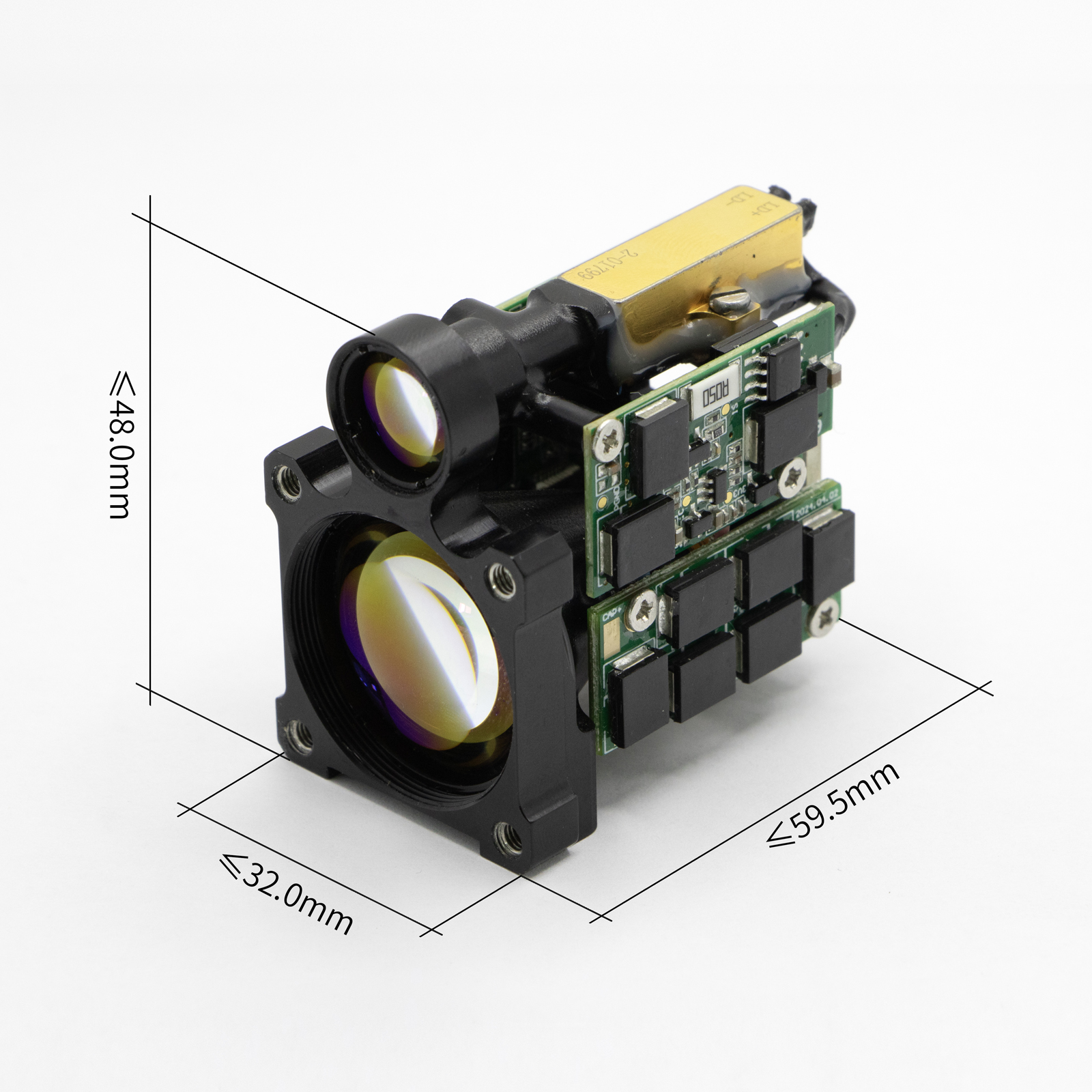
Core Components In sidea Optical distance sensor
Before diving into working principles, let’s look at the key hardware that makes measurement possible:
Laser emitter (laser diode): Generates a focused, coherent laser beam and shoots it toward the measured target.
Optical receiver (photodiode / CMOS detector): Catches laser light reflected or scattered back from the object surface.
Signal processing circuit: Analyzes raw optical signals, filters noise, calculates distance and outputs readable data.
Optical lens group: Focus outgoing laser and converge returning reflected light onto the receiver chip.
1. Time-of-Flight(ToF) Principle
Time-of-Flight, or ToF,is the most common technology for medium and long-range laser distance sensors.
The workflow is straight forward:
The laser diode sends out a short laser pulse to the target object.
The pulse hits the object surface and reflects back toward the sensor.
The internal high-speed timer records the total round-trip time the laser pulse spends traveling.
The processor calculates distance with this formula: Distance = (Speed of Light × Travel Time) / 2. Divide by two because the recorded time covers the trip to the target and back.
ToF laser distance sensors suit ranges from several meters up to hundreds of meters. They featurefast response and work reliably outdoors or in harsh factory environments. Typical applications include warehouse inventory monitoring, crane positioning,drone obstacle avoidance and bulk material level detection.
2. Phase-Shift Measurement
Phase-shift sensorsemit continuously modulated laser waves instead of single short pulses. Thelaser signal changes its wave pattern at a fixed frequency.
When the modulated laser bounces back, the sensor compares the waveform phase between the original transmitted signal and the returning reflected signal. The phase difference corresponds directly to light travel distance.
This method delivers better precision than basic pulse ToF for medium distances, usually millimeter-level accuracy. It fits automated production line positioning,building measurement and port container scanning. One limitation is phasea mbiguity over ultra-long ranges, so phase-shift sensors are designed fordefined working windows.
3. Laser Triangulation(Short-Range High Precision)
Laser triangulation targets short-range, ultra-high-precision measurement tasks.
The emitter projects alaser dot or line onto the target. The receiver lens captures the reflected laser spot and projects it onto a CMOS/CCD array. When the target moves closeror farther, the laser spot lands on different pixel positions on the detector.
Using the fixed geometric triangle formed by emitter, receiver and target spot, the sensor computes distance by analyzing the spot position. Triangulation sensors achievemicron-level accuracy. They are ideal for thickness checking, height profiling,part inspection and weld seam detection in precision machining.
What Factors AffectLaser Distance Sensor Readings
Even well-designed laser distance sensors have measurement limits. Buyers need to understand these influencing factors:
Target surface: Dark, matte surfaces absorb more laser and weaken return signals; shiny reflective surfaces may cause specular reflection and signal distortion.
Ambient light: Strong direct sunlight can create optical noise and reduce measurement stability.
Beam angle and target size: The laser spot must land on the target surface; too small targets may fail to reflect enough light back.
Temperature: Extreme high or low temperature drifts optical and electronic components, affecting accuracy.
Key Benefits of Laser Distance Sensors
Non-contact measurement: No wear on sensor orworkpiece, suitable for soft, fragile or high-speed moving objects
High accuracy and fast response: Real-time distance output for closed-loop automation control
Narrow laser spot: Measures small targets and works in tight spaces
Flexible outputoptions: Support RS485, Modbus, analog 4-20mA or switch signal for PLCintegration
Wide temperature and industrial-grade housing options for factory, outdoor and logistics environments
Common Industrial Applications
Distance sensor laser versatile across multiple industries:
Factory automation: Part presence detection, positioning, height and thickness inspection
Logistics & warehousing: Volume scanning, pallet positioning, conveyor object tracking
Construction & infrastructure: Structural deformation monitoring, crane anti-collision
Robotics: AGV/AMR obstacle detection and navigation
Smart agriculture: Crop height measurement and silo material level monitoring
FAQ
Q1: Are laser distance sensors the same as LiDAR?
A: Not exactly. Asingle-point laser distance sensor outputs one distance reading permeasurement. LiDAR uses arrays or scanning mirrors to generate 2D or 3D pointclouds for area mapping.
Q2: Can laser distance sensors measure transparent objects?
A: It depends. Clear transparent materials transmit most laser light, resulting in weak reflectionand unstable readings. For transparent targets, triangulation sensors withspecific wavelength options are recommended.
Q3: What is the difference between laser distance sensor and ultrasonic sensor?
A: Laser uses light, ultrasonic uses sound waves. Laser offers higher accuracy, smaller spot and longer measurement range, while ultrasonic is less expensive but affected byair temperature, wind and object surface angles.
Conclusion
In short, a laser distance sensor measures distance by sending laser light, capturing reflected signals and calculating distance through ToF, phase-shift or triangulation optical principles. Different technologies serve different range and precision needs.
Whether you needlong-range object detection or micron-level short-range profiling, selecting the right laser distance sensor relies on matching working range, accuracy requirement and target surface condition. Our factory supplies custom laser distance sensors and laser modules with fast delivery and full technical support for your automation projects.
If your project requires high safety for field deployment, check our erbium glass laser ranging module.This erbium glass optical distance sensor selects a laser with a wavelength of 1535nm, which ensures that it can also be used outdoors to ensure eye safety.
Regarding the author:
This article was written by the technical engineering team of Leirte Optoelectronics Technology Co., Ltd. in China. Our team is engaged in the research and production of laser diodes, fiber coupled lasers, and erbium glass lasers. Leirte supports OEM and ODM, deep customization, and has several standardized production lines and IATF16949 automotive grade certification. We are committed to providing customers with one-stop laser product solutions.
English
Name*
phone number/ Whatsapp / Wechat*
Email
message*