
Key Features of DFB Butterfly Lasers
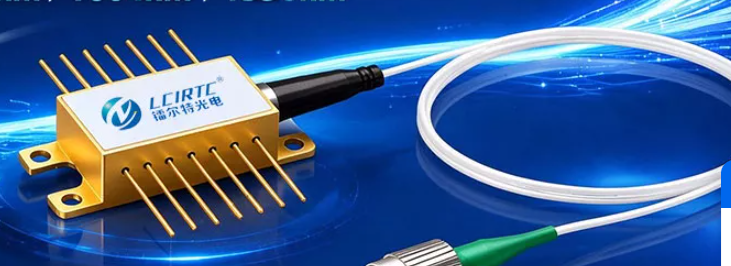
1. Wavelength Selectivity
The DFB grating provides wavelength-selective feedback, allowing the laser to operate around a designated wavelength. This is useful in systems with specific wavelength requirements.
2. Single-Longitudinal-Mode Operation
A properly designed DFB structure can support single-longitudinal-mode operation, reducing unwanted spectral modes. Actual performance should be evaluated using specifications such as SMSR.
3. Good Wavelength Stability
When combined with a TEC and thermistor, a DFB butterfly laser can maintain a more stable operating temperature. This helps reduce wavelength variations caused by temperature changes.
4. Fiber-Coupled Output
Many butterfly laser modules are available with fiber pigtails. Depending on the application, single-mode fiber or polarization-maintaining fiber can be selected for integration into optical communication, sensing, and measurement systems.
5. Integrated Functions
Depending on the design, the butterfly package can integrate a TEC, monitor photodiode, and optical isolator. This can simplify system integration and thermal management.
English
Name*
phone number/ Whatsapp / Wechat*
Email
message*