
New Breakthrough in VCSEL Technology: Laser Manufacturing Time Could Be Cut by Nearly Half
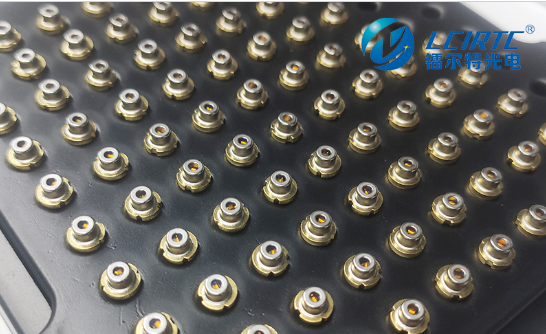
Researchers at Technische Universität Berlin (TU Berlin) have recently announced a new development in vertical-cavity surface-emitting laser (VCSEL) technology. The research introduces an innovative microlaser structure that could simplify the manufacturing process, reduce production time, and create new opportunities for semiconductor laser applications.
1. What Is the Main Technological Breakthrough?
Conventional VCSELs typically use distributed Bragg reflectors (DBRs), which consist of multiple semiconductor layers. These layers reflect light within the optical cavity, allowing light to build up and generate laser emission.
In the new design, researchers replaced most of the upper reflector layers with a precisely etched optical grating integrated directly into the semiconductor material. Through diffraction and the superposition of light waves, the grating can achieve an optical effect similar to that of conventional reflector layers.
This approach reduces the number of semiconductor layers that need to be deposited during manufacturing. According to the research team, a conventional process may take around 12 hours, while the new structure could reduce this time by approximately half.
The laser wavelength can also be adjusted by changing the width, spacing, and etching depth of the grating, offering a new approach to producing lasers with different wavelengths.
2. Potential Applications
The new VCSEL structure could have applications in several emerging technology fields.
Optical Communication and Data Centers: Compact VCSELs offer advantages in optical integration and fiber coupling. The new design could provide another option for high-speed optical interconnects in data centers.
Autonomous Driving and LiDAR: Lasers with different wavelengths can support distance measurement and environmental sensing. The technology may help enable the development of multi-wavelength laser arrays.
Optical Computing: Laser sources are essential components in optical information processing and neuromorphic computing systems.
3. What Does This Mean for the VCSEL Industry?
This research highlights an important direction in VCSEL development. Improving laser performance is no longer limited to increasing output power or modulation speed. Manufacturing efficiency, device integration, and wavelength control are also becoming important areas of innovation.
If the new structure can be further validated and successfully transferred to large-scale manufacturing, it may help reduce production steps, improve manufacturing efficiency, and provide greater flexibility in laser device design.
However, the technology is still at the research stage and requires further development before large-scale commercial adoption.
As artificial intelligence data centers, autonomous driving, and photonic computing continue to develop, demand for compact, efficient, and easily integrated laser devices is increasing. This new VCSEL research offers a promising approach to improving manufacturing processes and expanding potential applications, highlighting the continued evolution of semiconductor laser technology.
English
Name*
phone number/ Whatsapp / Wechat*
Email
message*